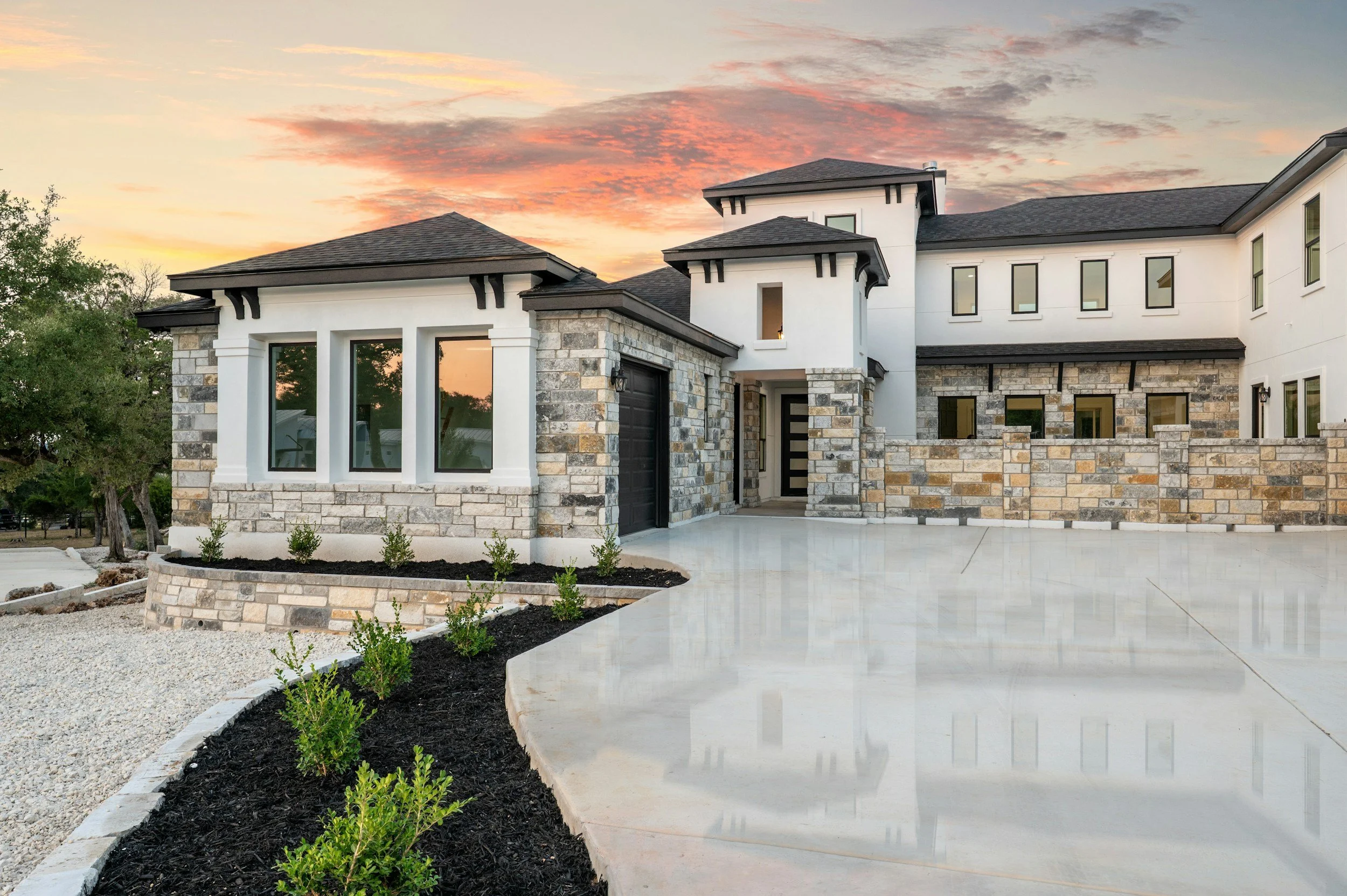
Custom Home Building Process
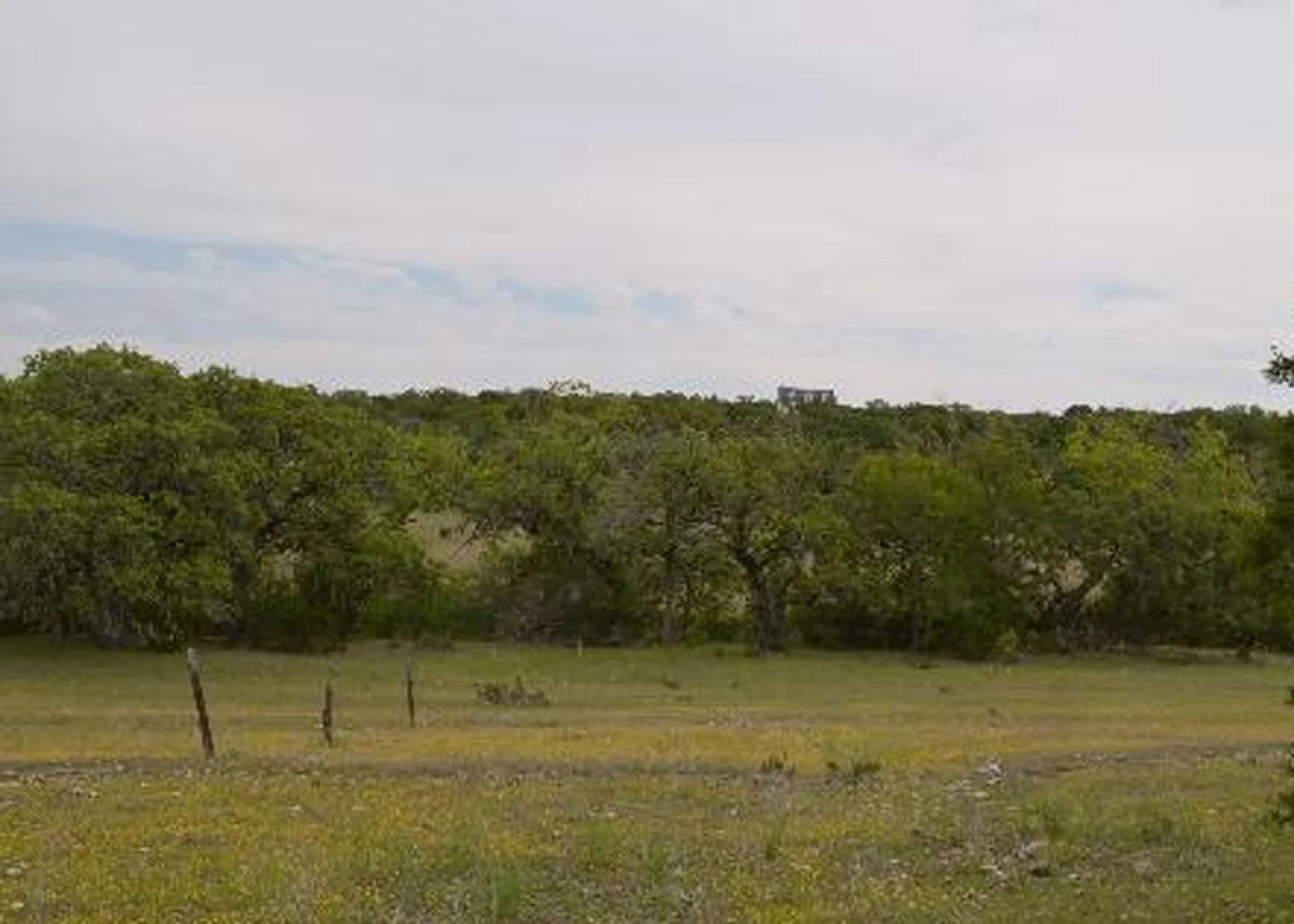
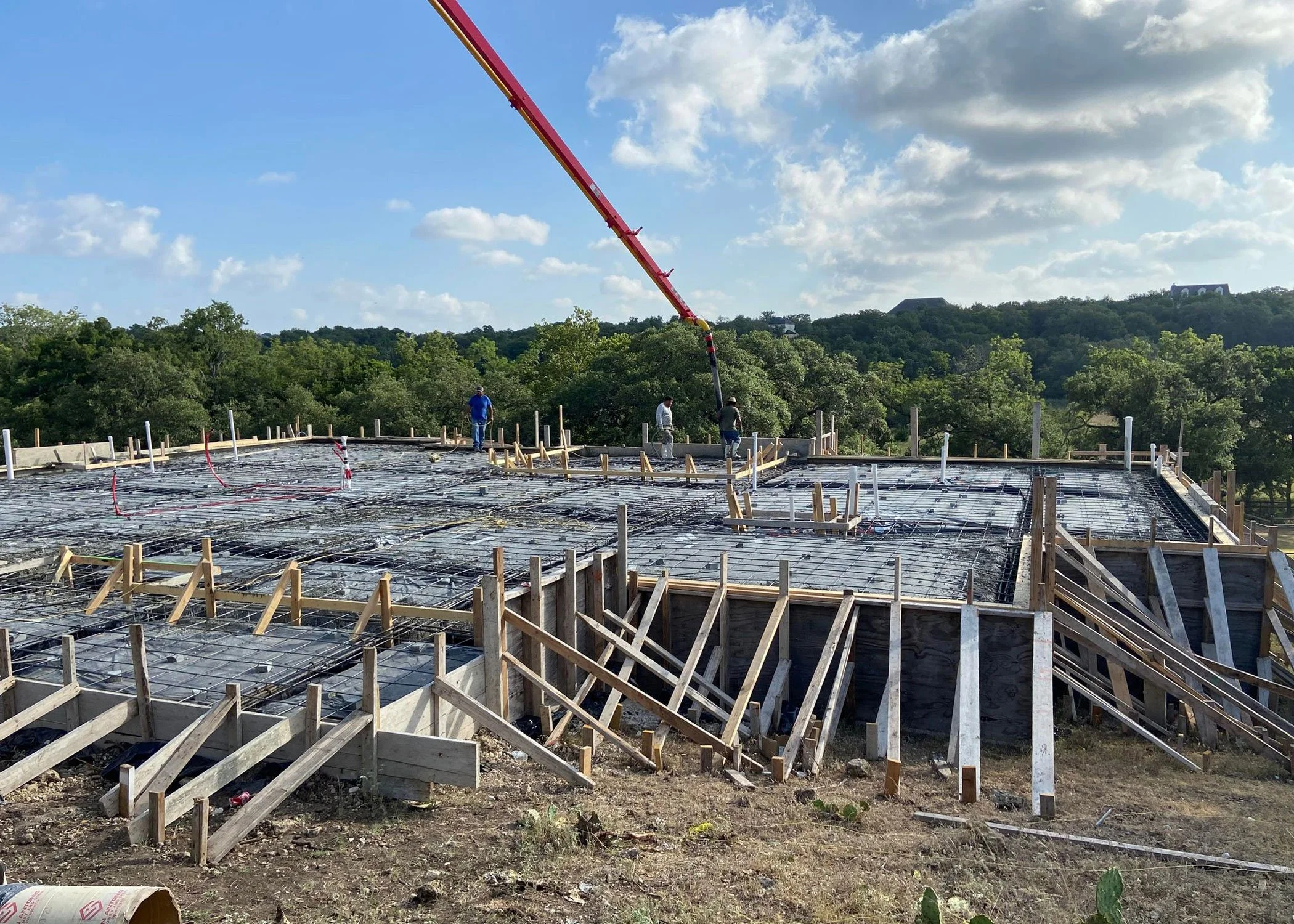
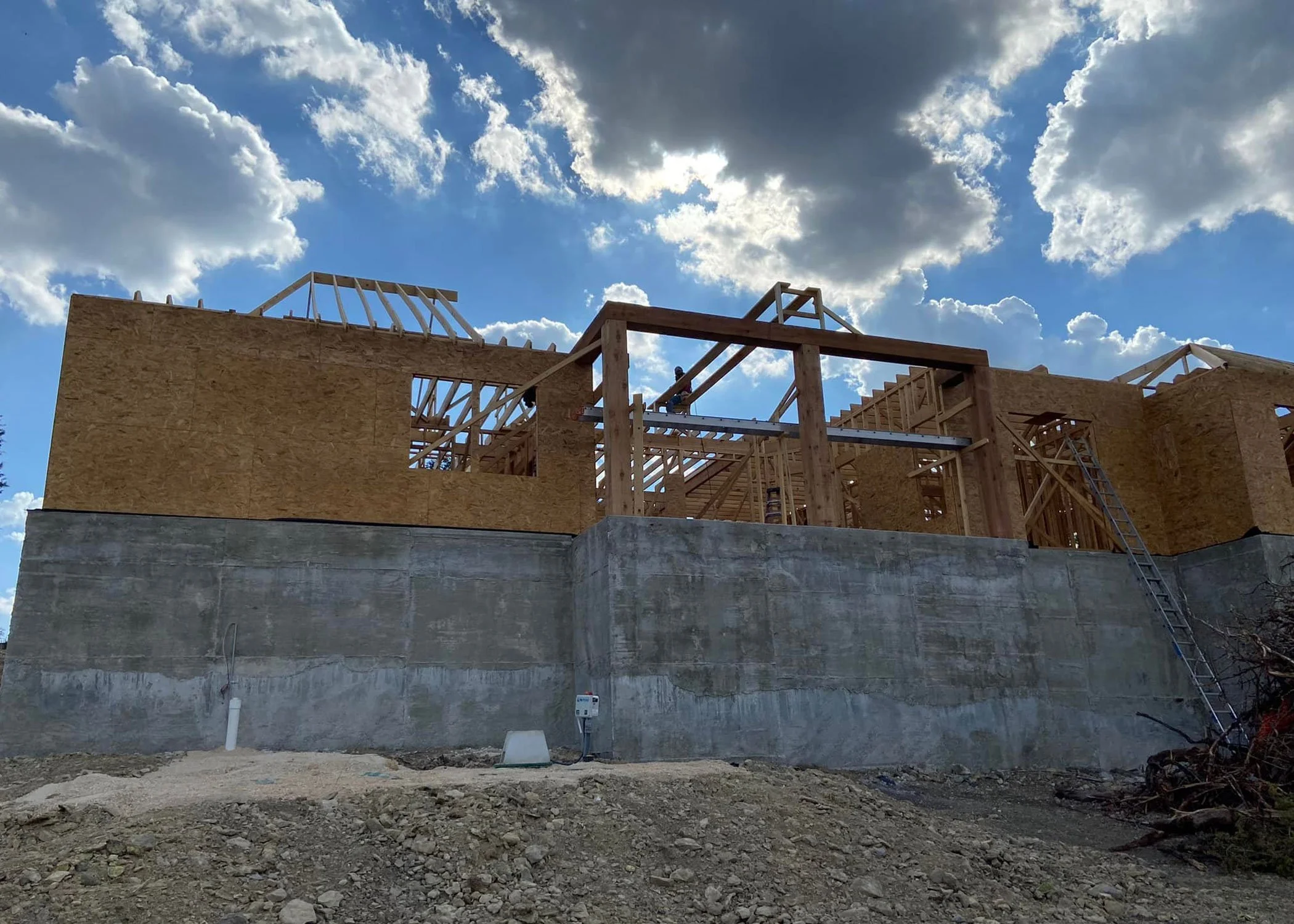
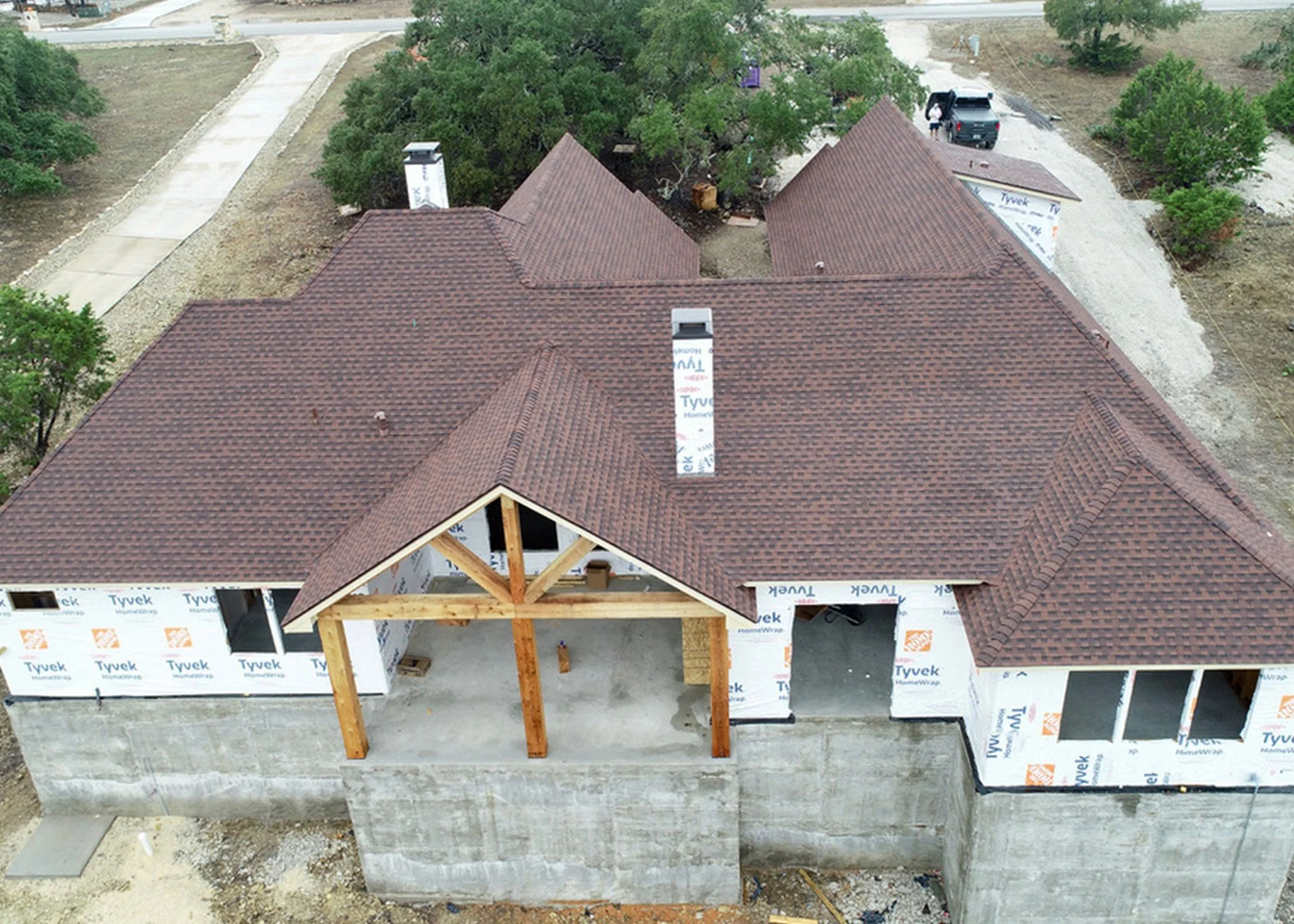
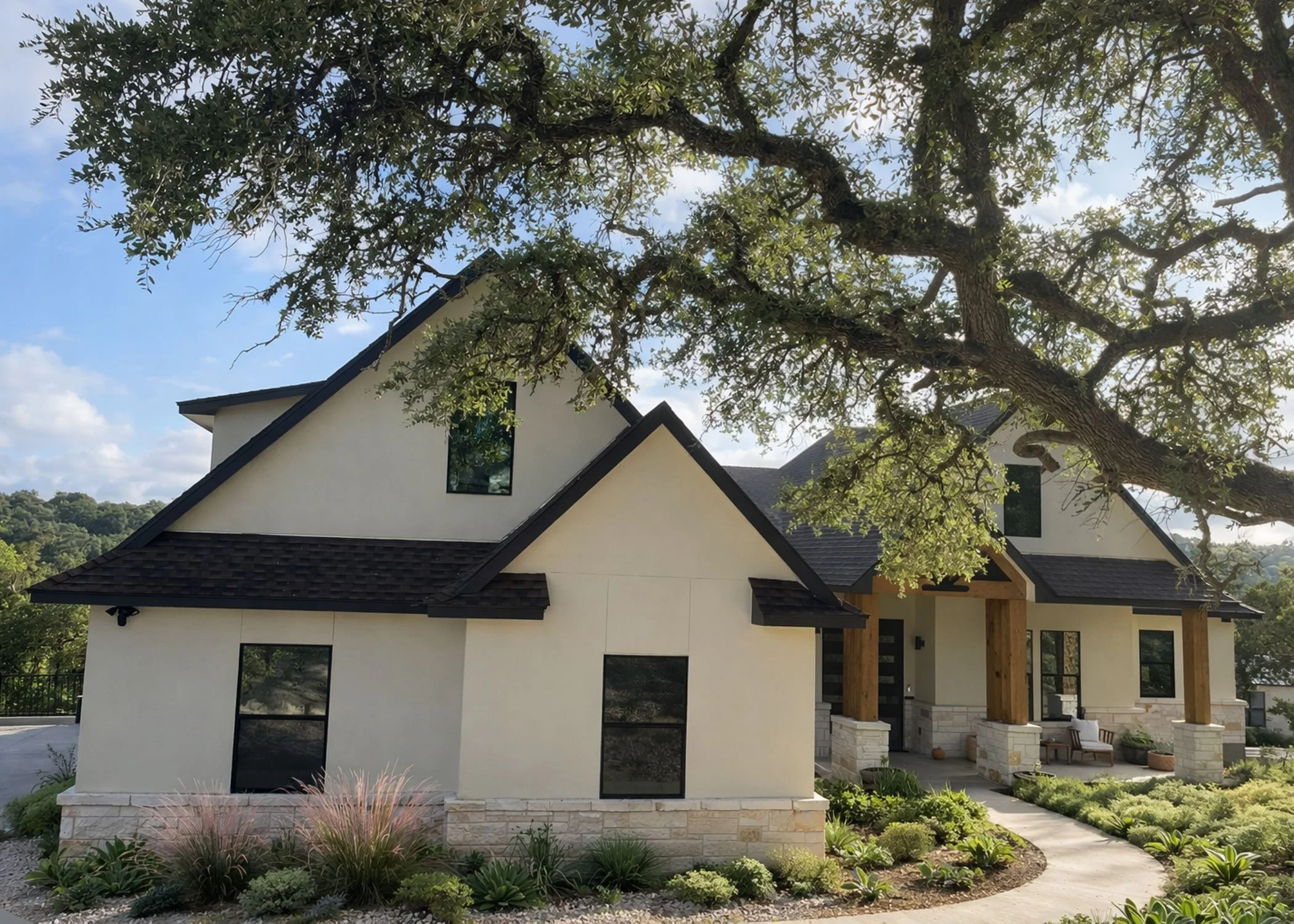
Capricorn Concepts Custom Home Build in the Texas Hill Country.
-
We’ll talk about your goals for the home, the property you’re building on, your timeline, and the overall scope of the project. Some clients already have land and architectural plans when they come to us, while others are still early in the planning process.
If you already have an architect or designer, we’re happy to collaborate with your team. If not, we can help guide you toward professionals who are a good fit for the project.
You can also choose a customizable design from our preferred firm Advanced House Plans.
At this stage we’re focused on understanding what you want to build and determining whether the project is feasible for the site and budget.
-
Building in the Hill Country often comes with unique site conditions - slopes, rock, drainage, septic systems, and utility access all play a role in how a home is designed and built.
Before moving too far into design, we review the property and discuss things like:
Building placement
Access and driveway layout
Utilities and septic
Grading and drainage
Structural considerations
This early evaluation helps prevent surprises later and ensures the design works with the property.
-
Once the direction of the project is clear, the design phase begins.
During this stage, we determine whether plans you already have will work well with your property. Clients are welcome to bring existing architectural plans, work with an architect of their choice, or collaborate with one of the designers we regularly work with. We can also help you explore customizable home plans from trusted design partners if you are still developing the overall layout and vision for the home. Our role is to stay involved throughout the process to make sure the plans are practical to build and aligned with the project budget.
Because Luke has both architectural training and construction experience, we’re able to review plans from both perspectives - design intent and real-world construction.
-
Once plans are developed, we prepare a detailed construction estimate based on the drawings and specifications.
This includes reviewing:
structural requirements
materials and finish levels
site work and utilities
allowances and selections
project schedule
We go through the estimate together so you understand exactly what’s included and where adjustments can be made if needed.
A clear scope of work at this stage helps avoid misunderstandings once construction begins.
-
Before breaking ground, several important items must be completed:
construction drawings finalized
permits submitted and approved
engineering and structural details confirmed
construction schedule established
major selections coordinated
Taking the time to prepare properly before construction helps keep the build moving efficiently once work begins.
-
Once permits are approved and the project is ready, construction begins.
Typical construction stages include:
site preparation and foundation work
structural framing
roofing, windows, and exterior systems
plumbing, electrical, and HVAC rough-ins
insulation and drywall
interior finishes and cabinetry
exterior finishes and landscaping
These phases happen in sequence as the structure takes shape. During this time we coordinate subcontractors, inspections, materials, and scheduling to keep the project moving forward.
Because we intentionally limit the number of projects we take on, Luke remains closely involved throughout the entire build and is regularly on site, working alongside the team and overseeing key phases of construction.
-
As construction wraps up, we complete final inspections and walk through the home with you to review all finishes, and details.
This is where we address final punch-list items and make sure everything is ready for move-in.
Our goal is simple: deliver a home that reflects the vision you started with and was built with care from the ground up.
-
Even after construction is complete, we remain available for questions and support related to your home. A custom home is a long-term investment, and we take pride in our craftsmanship.
Capricorn Concepts provides a one-year workmanship warranty on contractor-supplied and installed items, with manufacturer warranties applying where applicable.
“We hired Capricorn and could not be happier with them. Luke helped us with selections and was transparent from start to finish. I definitely recommend using them for any construction services.”

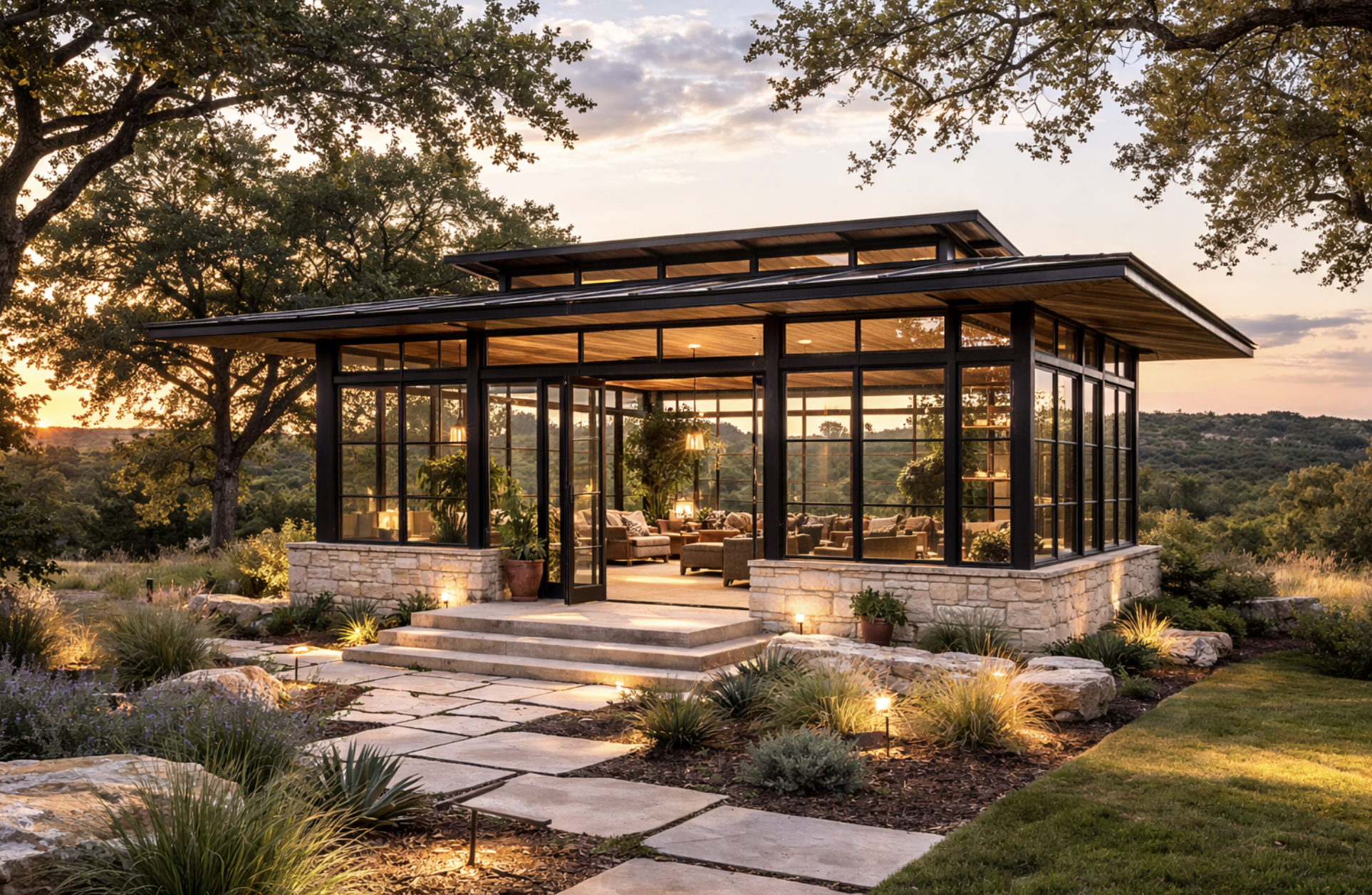
Building a conservatory requires careful planning to ensure the structure works well not just with your property but the Texas climate. We will evaluate placement on your property to determine sun exposure, roof orientation, and how the structure will connect to the existing home - or function as its own standalone garden conservatory, glass room addition, or greenhouse-style living space.
During the early planning phase, we review site conditions, structural requirements, and how the conservatory will integrate with the surrounding architecture and landscape. Proper orientation and shading are especially important in Central Texas, where afternoon sun can significantly impact comfort inside greenhouses and conservatories.
Throughout construction, our team manages the entire project from foundation and structural framing through installation of the glass roof and wall systems, as well as any interior finishes you might add that customize the space to your needs.
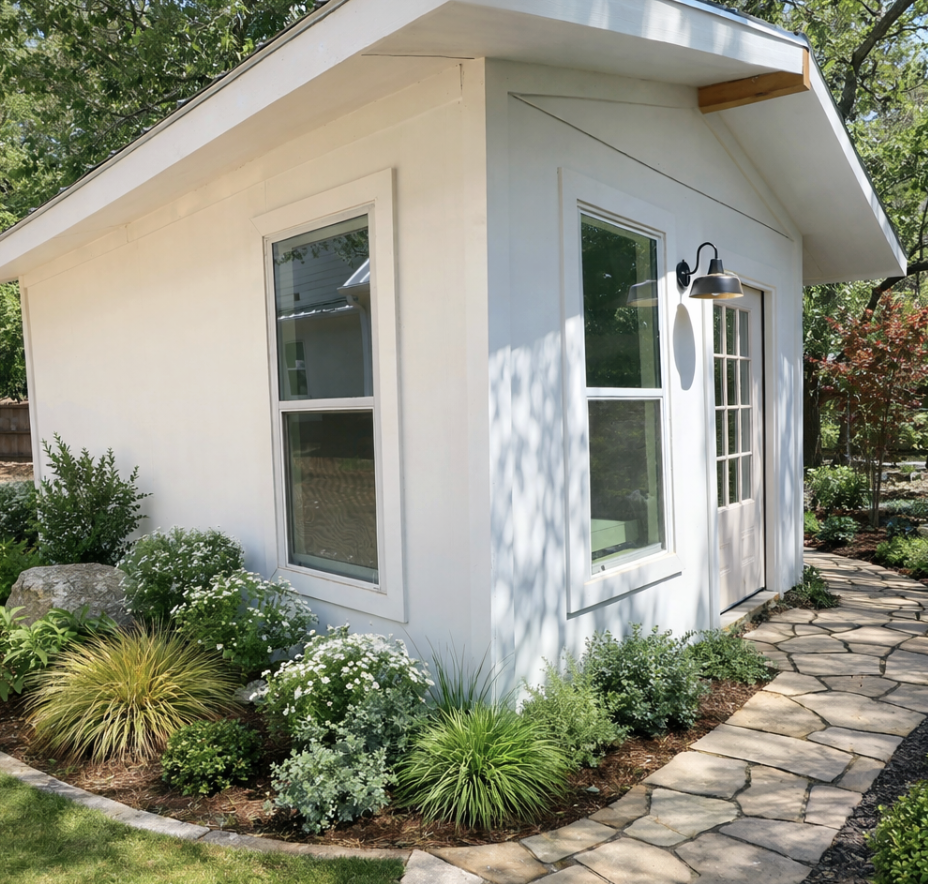
Capricorn Concepts Custom backyard office with powder room in Timberwood Park.
Smaller detached structures like casitas, accessory dwelling units (ADUs), backyard offices and pool houses are one of the most common ways homeowners add flexible living space to their property.
These spaces can be used in a variety of ways - guest houses, multigenerational living, backyard offices, or even private rental units.
Because these projects are typically smaller than full custom homes, we’re often able to provide starting price ranges per square foot depending on the design and level of finishes selected. Final pricing will always depend on the size of the structure, site conditions, utilities, and architectural details.
During the planning phase, we review placement on the property, utility connections, setbacks, and permitting requirements to make sure the structure fits well with the existing home and site.
Our ADUs and pool houses typically start around $280 per square foot, with final pricing depending on the size of the structure, site conditions, utilities, and finish selections.
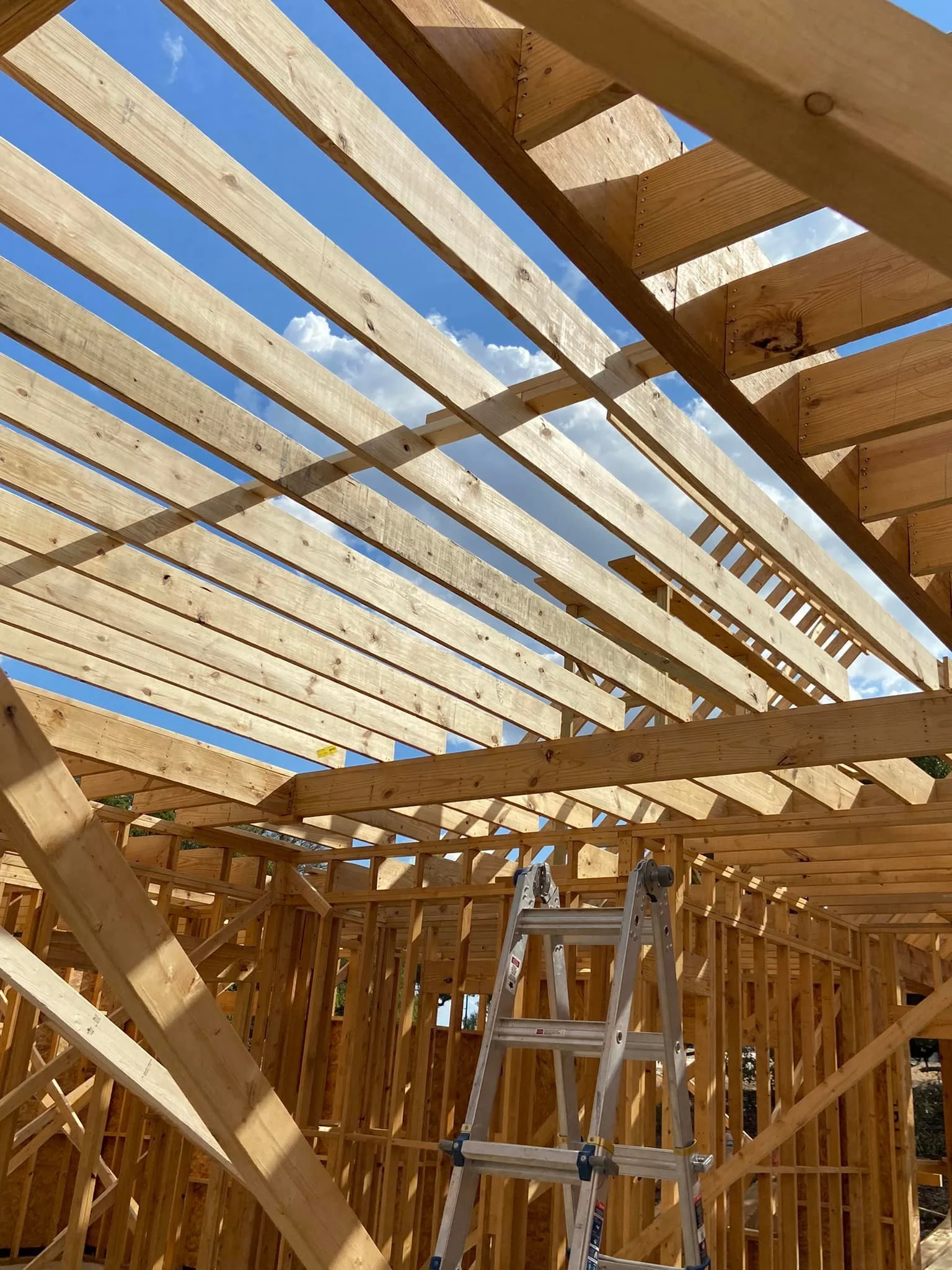
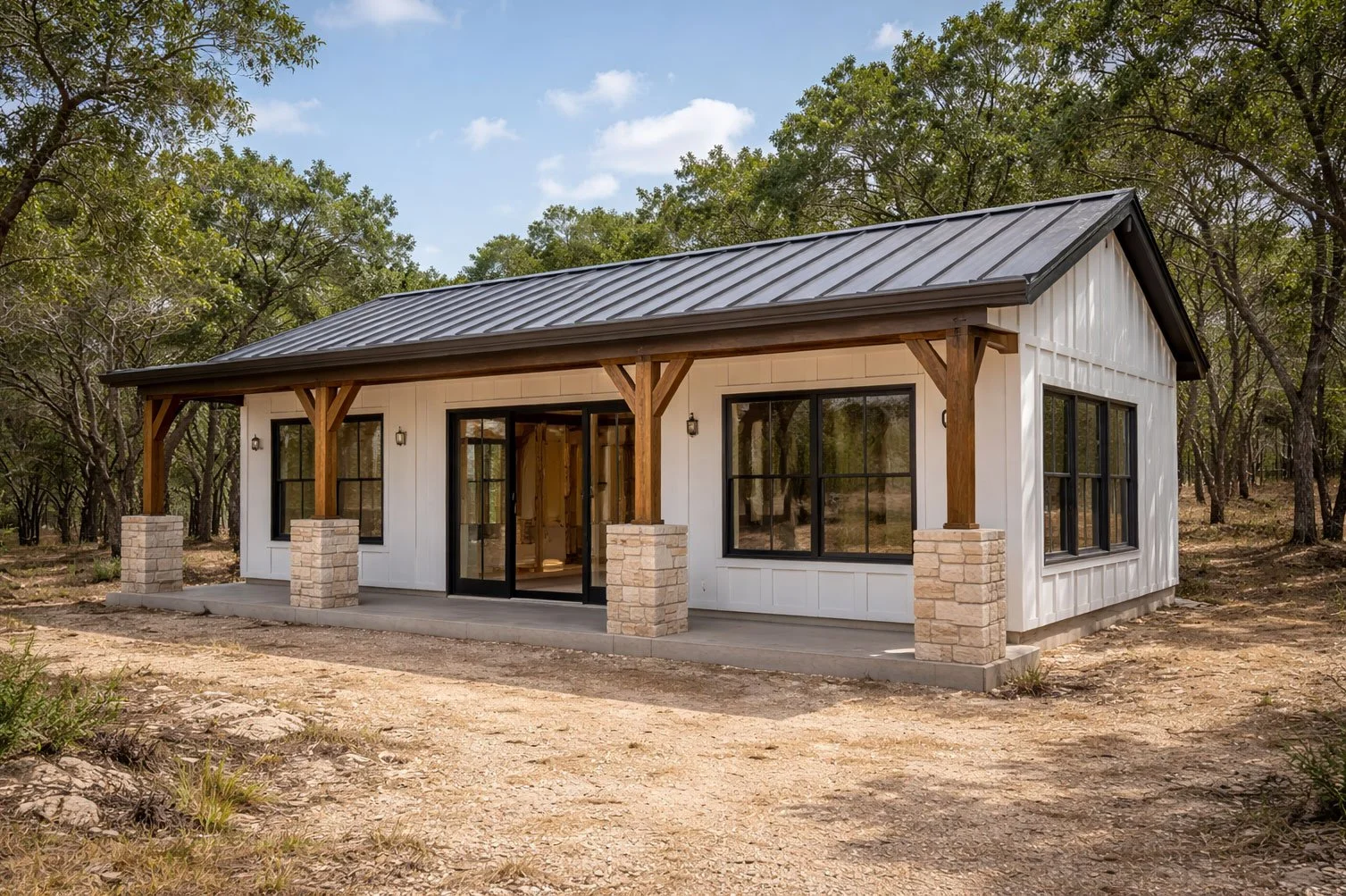
For some projects, clients prefer to have the primary structure built and then complete the interior finishes separately. In these cases, we can provide shell-only construction, where we build the structural components of the home while leaving interior finish work for the homeowner or their chosen trades.
The shell-only construction will closely mirror our custom home build process.
Shell construction typically includes the foundation, structural framing, roofing, windows, exterior doors, and exterior siding, bringing the structure to a weather-tight condition.
In some cases we can also coordinate select rough-in trades such as plumbing, electrical, or HVAC depending on the scope of the project.
This option is often used for casitas, ADUs, barndominiums, guest houses, workshops, or owner-finished homes, where the client plans to complete interior work such as cabinetry, flooring, trim, and other finish items at a later stage. Because each project varies depending on size, design, and site conditions, shell construction pricing is determined during the planning and budgeting phase.
Major Renovations & Structural Additions
Major renovations and structural additions require careful planning, especially when integrating with existing structures.
Projects may include:
Large-scale interior renovations
Structural additions
Attic conversions
Reconfiguring floor plans
Expanding kitchens or living areas
Adding additional square footage to an existing home
Our focus during renovation projects is making sure the new work integrates cohesively with the original structure, while minimizing disruption during construction.
Because every existing home presents different conditions, renovation projects begin with a site visit and evaluation before budgeting and planning can move forward. Accurate estimates cannot be provided without a site visit.